Twenty years of building confidence in young people was the background I needed to teach art
How do you build confidence in children who doubt their abilities? Discover how art gives kids the chance to try, create and see what they're capable of.
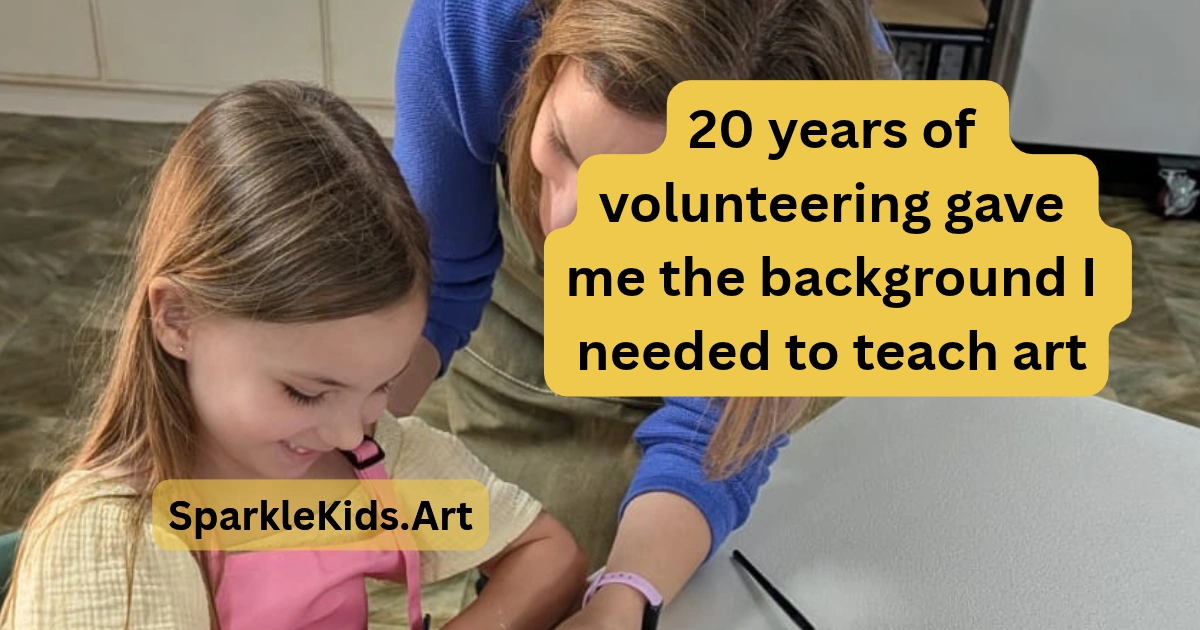
Self-confidence doesn’t appear overnight; it grows slowly over time. We can’t gift it to a child, however much we might wish we could. The only thing we, as parents, can do is give our child opportunities again and again, and hope their belief in themselves grows.
After twenty years of volunteering with children to build their personal skills, I know there’s no magic spell that guarantees confidence in a child. But I also know that certain opportunities work better than others.
For many kids, art is ‘hard’. They decide they weren’t born with the skills to create something worth the effort they put into it. They tell themselves that story so many times that they start to believe it, and eventually they stop trying.
If you’re wondering how to build confidence in a child, the most reliable answer I’ve found is to help them see for themselves that they’re capable. What helps build confidence in young people isn’t being told they’re capable. It’s proof.
Art workshops can provide that proof quite quickly, often faster than school, where kids are rarely able to finish a piece of art in the 45 minutes they’re given. By the time they’ve settled into the room and heard the instructions, 10-15 precious minutes are already gone. A workshop gives them dedicated time to see their progress build, step by step, and to walk out holding the finished piece.
What does confidence actually look like in a young person?
Confidence isn’t always easy to see, but you can often recognise it in a child’s behaviour. It’s a child who tries. A child who keeps going. A child who says ‘I’ll have a go’ instead of ‘I can’t’.
It’s also not the same thing as ability, bravery or being outgoing. Quiet children can be deeply confident, and loud children can be secretly terrified. So what builds confidence in children? It’s rarely volume or talent. It’s the experience of attempting something, struggling a little, and discovering they can handle it.
I knew all of this from my twenty years of experience, but I didn’t fully understand it until I had a child of my own, one who sometimes needs reminding how capable she is. When she creates art, she lights up. She focuses in a way she doesn’t with anything else, and she wants to display her artwork everywhere so everyone who visits can see it.
When rewards don’t build confidence
Rewards are everywhere in childhood, and most of them come from good intentions but often have unintentional impacts.
Star charts are a good example. They’re a behaviour management tool, and a good one for a large group: reward the behaviour you want and the class becomes easier to run, while the kids learn how to work in a school environment (which sets them up well for a professional one).
But kids learn other lessons from them too, and they’re not always the ones we’d choose. Star charts reward the kids who can sit still and follow the rules. What about the kids who need to experiment, make mistakes and try again? Or the ones who find sitting still difficult? If they consistently collect fewer stars, they might start to believe they're not as capable as their classmates, or that there's little point in trying.
Praise works like a reward too. Telling a child they’re amazing is how lots of us show we care, and there's nothing wrong with encouragement. But when it isn’t connected to something they’ve actually done, it doesn’t necessarily build confidence. Children benefit from discovering they're capable, rather than simply being told they are.
A child who’s told they’re brilliant before they’ve tried anything can even start to avoid things they might not be good at, because they don’t want to lose the label.
Why art is the best confidence-building tool I’ve found
The difference is where the reward comes from. A star or a compliment comes from someone else, which means it can be withheld or never arrive at all. A finished piece of art is a reward a child earns through their own effort, and nobody can take away the achievement behind it. That’s the kind of reward that builds lasting confidence.
The activities that build confidence in children are the ones that give them a bit of a push: a challenge that’s hard but not too hard, followed by a result they can see and hold.
You can tell a child they’re capable all day, but making something with their own hands does what words can’t. The moment a child looks at their finished artwork and thinks ‘I didn’t know I could do that’ is more powerful than a hundred compliments, because the proof is right there in front of them.
This is how art builds confidence in children. It gives them real decisions to make (which colours, which animal, where to put the tree), real challenges, and a real finished thing they made themselves. Unlike many sports or performance activities, there’s no winner and no single right answer. There's just a child and what they've made.
It also means making something, rather than being taught or told something, is where the real growth happens. To build confidence in kids, that matters more than any technique.
Here, the reward is the art itself.
What I’ve learned that I now bring to every Sparkle Kids Art workshop
Twenty years of watching young people grow has shaped how I run every art workshop.
We keep our groups small, so I can give each child individual attention, right when they need it. Sometimes that's a little encouragement; sometimes it's helping them work through something they find tricky.
Our art workshops are guided but not prescriptive, because children need opportunities to make decisions. I teach techniques, and they make creative choices.
We choose artworks that are challenging but achievable. I want children to have to think, try things and work through little challenges, but I don't want them to feel out of their depth. There's a balance between making something too easy and making it so difficult that they give up. Getting that balance right gives children the chance to surprise themselves with what they can do.
Every child leaves with a finished artwork, because the proof of what they’re capable of needs to be something they can hold.
Come and see for yourself
Sometimes children just need the right opportunity to discover what they're capable of. This is especially true for children who overthink things, worry about getting things wrong or are convinced they're ‘not good at art’.
At Sparkle Kids Art, I want every child to experience that moment of looking at something they've made and thinking, "I did that!"
If you'd like your child to experience this approach to learning, we'd love to have them. Book a school holiday workshop at sparklekids.art.