How art builds confidence in children
The benefits of art for children go beyond technique. Discover how art builds confidence and what to look for in a workshop that makes it happen.
Oct 12, 2026
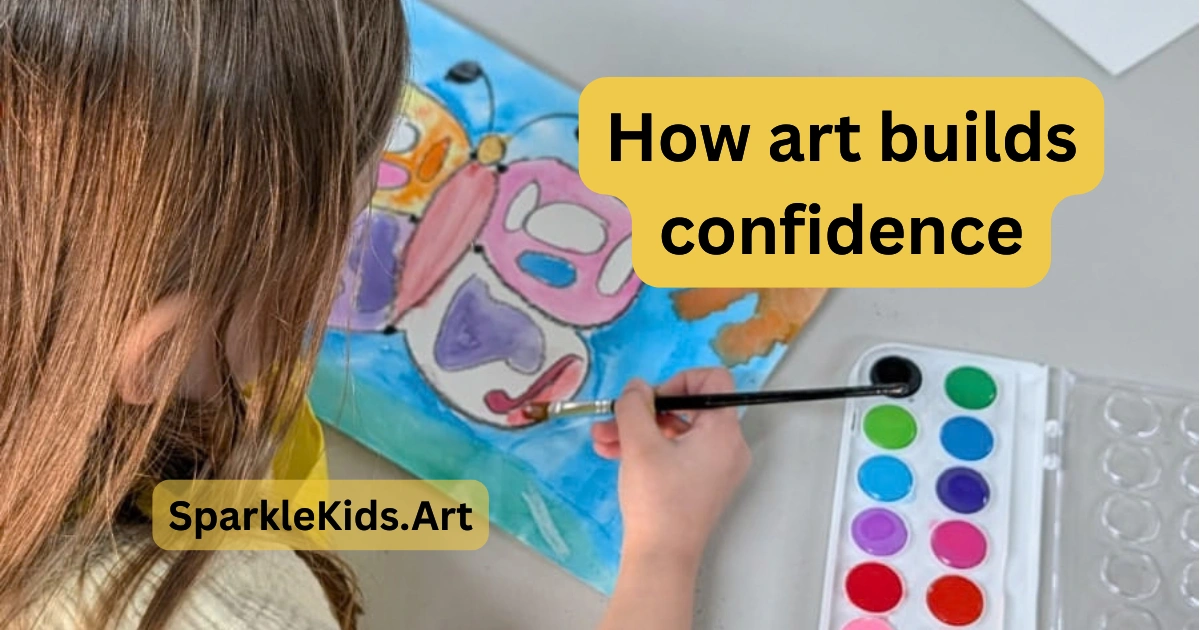
There’s a moment that happens at every single Sparkle Kids Art workshop, and I never get tired of it.
A child places their artwork into a frame, turns it around and looks at what they’ve just made. There’s a pause, and then a smile spreads across their face. A real smile. The kind that says "I didn’t know I could do that".
It doesn’t matter if they arrived nervous or spent the first ten minutes watching everyone else before they picked up their brush. By the end of the session, they’re holding something they made with their own hands; it’s beautiful, and they know it.
That moment isn’t just about a painting. It’s about what a child now believes they’re capable of. And that belief goes with them long after the paint has dried.
Why confidence matters more than ability
When parents ask me what children learn at Sparkle Kids Art, I think they're expecting me to tell them about techniques. And yes, we learn real skills like atmospheric perspective, negative space, and colour theory, but the benefits of art for children go well beyond the technique they'll learn. I think the most important thing a child takes home isn’t the painting. It’s confidence.
We tend to measure children’s activities by what they learn to do. Can they kick a goal? Write their name? Play a scale? But the most valuable thing a child can gain from any activity isn’t the skill itself; it’s the belief that they’re capable of acquiring one. A child who discovers they’re capable of making something beautiful, especially something that surprises even themselves, carries that discovery into other areas of their life. Into the classroom. Into friendships. Into the next hard thing they’re not sure they can do.
Confidence is transferable. It doesn’t stay in the art room.
Making decisions builds confidence
One of the things I love most about guiding art sessions is watching children make individual decisions.
Which animal will you choose for your constellation? What colours do you want in your background? Do you want to add more detail to the petals, or are they done?
These might sound like small choices, but for many children they are genuinely significant ones. In a lot of children’s activities, the decisions are already made: the rules, the positions, the right answers. One piece of art gives children the opportunity to make multiple decisions.
Each time they make a decision, they make the next one with a little more certainty. And the one after that with more again. By the time they’re adding the final details to their painting, they’re not checking with me every few minutes. They’re just creating. That growing sense of agency is confidence being built in real time.
Getting it wrong is part of getting it right
As they grow, our kids learn that mistakes are a problem to solve. In art, it's just part of the process.
Put too much paint in one spot? Blend it into the background, let it become texture, paint something over it. Drew a line in the wrong place? Good. Now you have to make a decision and that decision will make the painting yours.
When children learn to work with their mistakes rather than against them, they stop being afraid of making them. And a child who isn’t afraid of making mistakes, who's willing to try, to keep going, to find a way through, is building resilience. And resilience is confidence in action.
What to look for in an art workshop for kids
Not all children’s art workshops are created equal. If you’re looking for a session that builds your child's confidence, not just produces a painting, here’s what to look for.
Small groups. Confidence grows more easily in a calm, unhurried environment. A child who feels lost in a crowd is a child who watches rather than creates. Look for workshops with a maximum of around ten children, where every child can get genuine attention and support.
Guidance without rigidity. The best sessions are structured enough that every child finishes with something they’re proud of, but flexible enough that every painting looks different. If every child’s artwork looks identical, the children aren’t making creative decisions; they’re following instructions. Look for workshops where the technique is taught but the creative choices belong to the child.
Mistakes treated as part of the process. Listen to how the teacher talks about mistakes. Are they something to fix, or something to work with? A teacher who says “let’s see what we can do with that” is building a very different experience to one who reaches over and corrects the error.
A finished piece to take home. The finished artwork is the physical evidence of what a child achieved. It goes on the wall. It gets shown to grandparents and friends and teachers. Every time a child looks at it, they're reminded: I made that.
Come and see for yourself
If you’d love your child to experience that moment, the smile that builds confidence, we’d love to have them.
Sparkle Kids Art runs guided art workshops for children aged 6-12 in Springwood, Logan during school holidays and on weekends. Small groups, real techniques, and every child goes home with a finished painting ready to display with pride.
See what’s coming up at www.sparklekids.art.